Lamp off. Phone face-down on the nightstand. White wall catching a soft rectangle of picture while light from the hallway still leaks under the door—roommate cooking, or just the hallway bulb nobody turns off. That is the bedroom-projector brief: wall movies from a pillow, not a living-room ultra-short-throw cinema install.
Short answer: in a dark bedroom, take licensed apps (Netflix that actually opens), quieter fan figures as the brand lists them, and placement helpers—auto focus, auto keystone, a stand that tilts—over the biggest marketing lumen number. Can-size portable for travel-to-bedroom nights; plug-in for every evening on the nightstand. This is a buying filter, not a scored ranking. We did not measure dB or nits in a lab. Specs and list bands are brand-published or retailer-listed as checked Nov 2026.
Disclosure: This article may contain affiliate links. If you buy through them, we may earn a commission at no extra cost to you. We only recommend products that fit our editorial criteria.
What “bedroom projector” actually means
A bedroom wall projector is usually a compact 1080p unit aimed at a painted wall or a pull-down screen from a nightstand, dresser, or low shelf. You are watching from a pillow—sometimes on your side—so angle flexibility and fan noise matter as much as punchy brightness. This is not the living-room UST category (laser short-throw boxes that sit inches from a 100-inch ALR screen). Different room, different filter.
People search bedroom projector, best projector for bedroom, bedroom wall projector, bedroom movie projector, portable. Same job: quiet enough to sleep near, bright enough once the curtains close, smart enough that you are not hunting an HDMI stick at midnight.
The bedroom buying filter (checklist)
Work these in order. Skip the ones that do not match your room.
-
Brightness — prefer ISO 21118 / ANSI numbers. Brands publish ISO or ANSI lumen figures; those are the useful comparisons. Marketing “LED lumens” often inflate the story and are not the same scale. A dark bedroom with curtains can live with a few hundred ISO/ANSI lumens. Daylight from a west-facing window changes the game—then you need more light or better blackout, not a louder brochure claim.
-
Noise. Brand dB figures are listed claims, not our measurement. Side-sleepers and light sleepers feel fan hum more than living-room viewers. Prefer quieter published numbers when models are otherwise similar—do not invent a “whisper quiet” score from a product shot.
-
Auto focus / auto keystone / obstacle avoidance. Nightstands are crooked. Remotes get lost under a duvet. ISA-style auto alignment, autofocus, and auto keystone save the “why is the picture a trapezoid” fight at 11 p.m.
-
OS and licensed Netflix. Google TV or Samsung Tizen with licensed Netflix (and other apps on the device) beats casting-only workflows when you just want to press play. Casting from a phone works; it is one more step when you are half asleep.
-
Battery portable vs plug-in. Battery cans move from suitcase to nightstand. Plug-in units stay put and often pair with USB-C power banks for short sessions—check the brand’s Type-C / power-bank notes before you assume runtime. Do not invent battery minutes beyond brand claims.
-
Throw ratio. Many compact bedroom units sit near a ~1.2:1 standard throw (roughly: distance ≈ 1.2 × image width). Tiny rooms that need the unit inches from the wall need true short-throw or ultra-short-throw—most portable nightstand models are not that.
-
Ceiling vs wall tilt for side sleepers. A 130°–180° cradle or rotating lens lets you aim at the ceiling or high on the wall while your head stays on the pillow. Stands matter as much as lumens here.
Comparison snapshot (type illustrations, not ranked)
Facts below are brand or retailer claims as listed Nov 2026. List bands move with promos. Not a scored ranking.
| Model | Brightness (stated standard) | OS / Netflix | Battery | List band | Bedroom fit |
|---|---|---|---|---|---|
| XGIMI MoGo 3 Pro | 450 ISO lumens (brand, ISO 21118) | Google TV + licensed Netflix | Type-C / power-bank friendly (no built-in pack as primary story) | ~$379–$449 US XGIMI | Small bedroom wall movies, smart apps, flexible nightstand angle |
| Nebula Capsule 3 | 200 ANSI lumens (brand) | Google TV + Netflix | Built-in; brand ~2.5h video claim | ~$400–$530 | Ultra-portable / travel-to-bedroom; darkest rooms; smaller image |
| Nebula Mars 3 Air | 400 ANSI lumens (brand) | Google TV + Netflix | Built-in; brand ~2.5h claim | ~$520–$600 | Brighter portable bedroom/backyard hybrid |
| Samsung The Freestyle 2nd Gen | 230 ANSI lumens (brand) | Tizen Smart TV + Gaming Hub | No built-in; optional battery base accessory | MSRP ~$799; street often ~$500–$600 | Samsung ecosystem; ceiling-or-wall tilt; plug-in nightstand |
| BenQ GV31 | 300 ANSI lumens (brand) | Android TV with Netflix license (per BenQ US / reviews) | Built-in; brand up to ~180 min low-power claim | ~$599 street | Pillow / ceiling projection in small bedrooms |
Five type-illustration models
These are list-band / brand-claim illustrations for the filter above—roles you might match to a room, not a #1 through #5 scorecard.
1. XGIMI MoGo 3 Pro — nightstand smart apps + angle
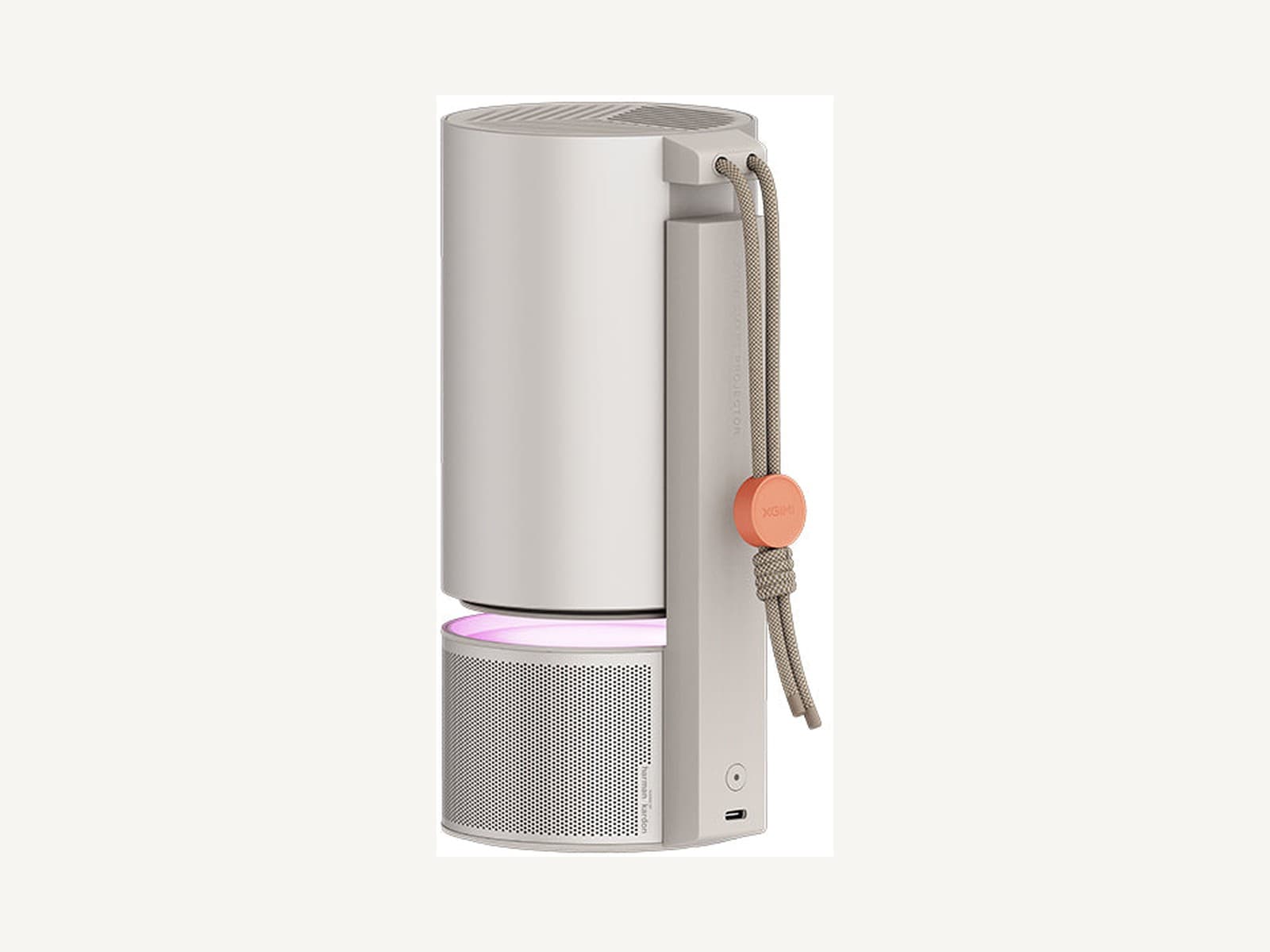
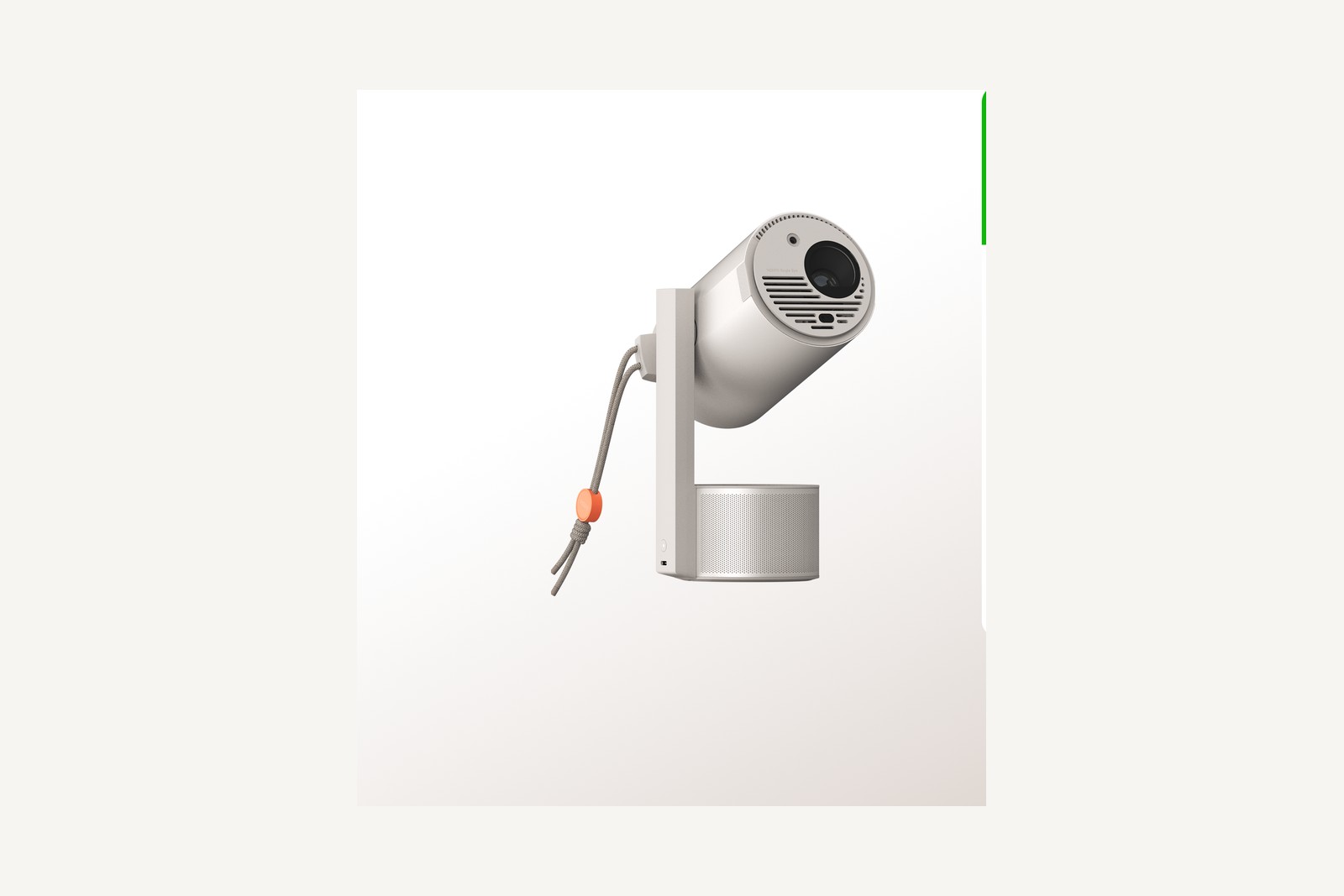
A 1080p nightstand type with 450 ISO lumens (brand, ISO 21118), Google TV and licensed Netflix, ISA 2.0 auto alignment, a 130° stand, dual 5W Harman Kardon speakers, and Type-C power that accepts a power bank more readily than many plug-only boxes. Official: XGIMI MoGo 3 Pro.
- List band: ~$379–$449 US XGIMI (street often ~$379; regular cited ~$449), Nov 2026 research day
- Best for: small bedroom wall movies when you want apps on the device and a stand that actually tilts on a crowded nightstand
2. Nebula Capsule 3 — can-size portable
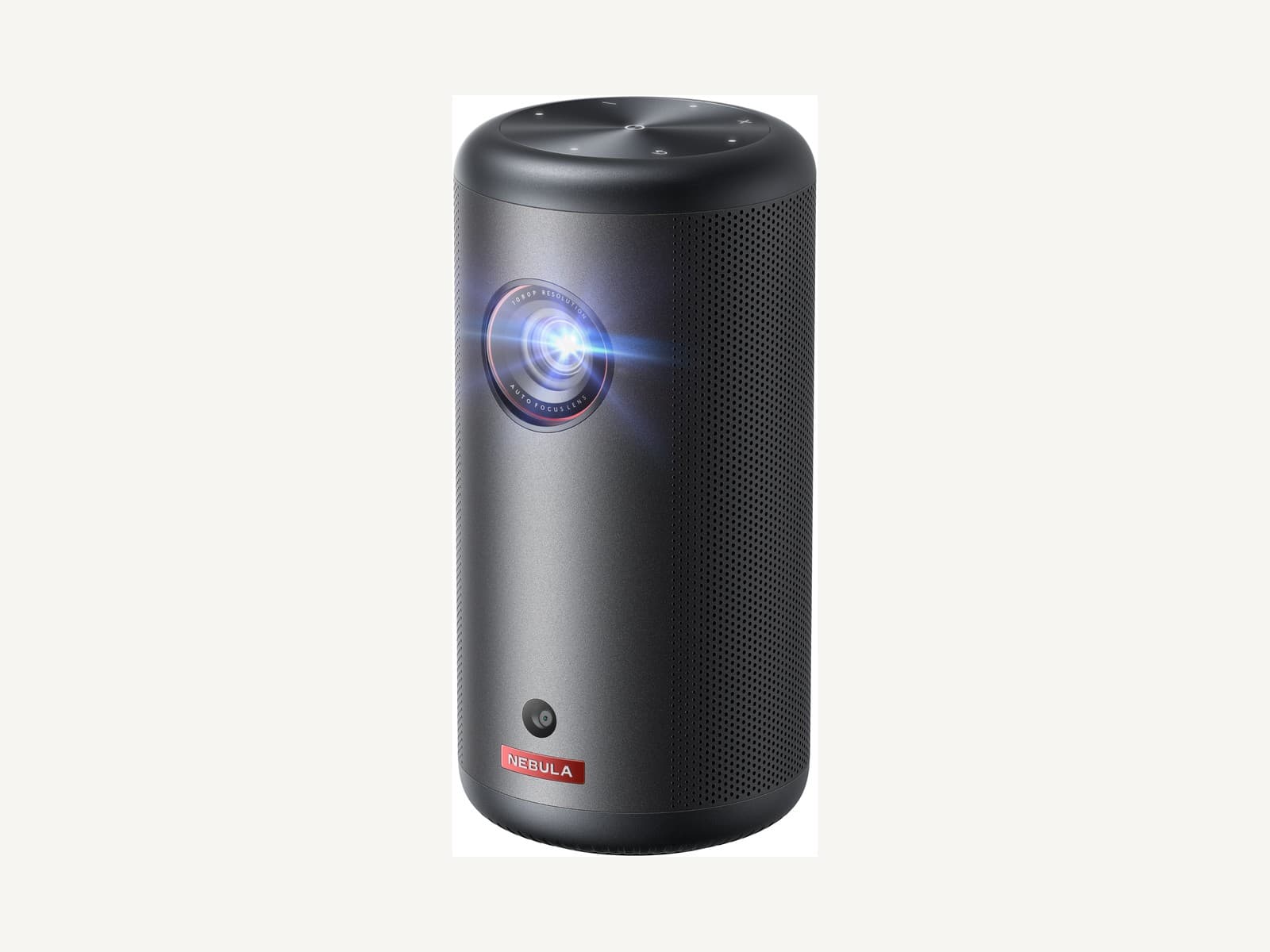
Anker / soundcore’s can-shaped 1080p portable: 200 ANSI lumens (brand), Google TV + Netflix, auto setup, built-in battery with a brand ~2.5h video claim. Some retailer sheets list fan noise around ~28 dB—cite that as listed, not as our test. Official: Nebula Capsule 3.
- List band: ~$400–$530 (B&H often near ~$400; Anker list higher)
- Best for: ultra-portable / travel-to-bedroom; darkest rooms; accepting a smaller, dimmer image for the can form factor
3. Nebula Mars 3 Air — brighter portable hybrid
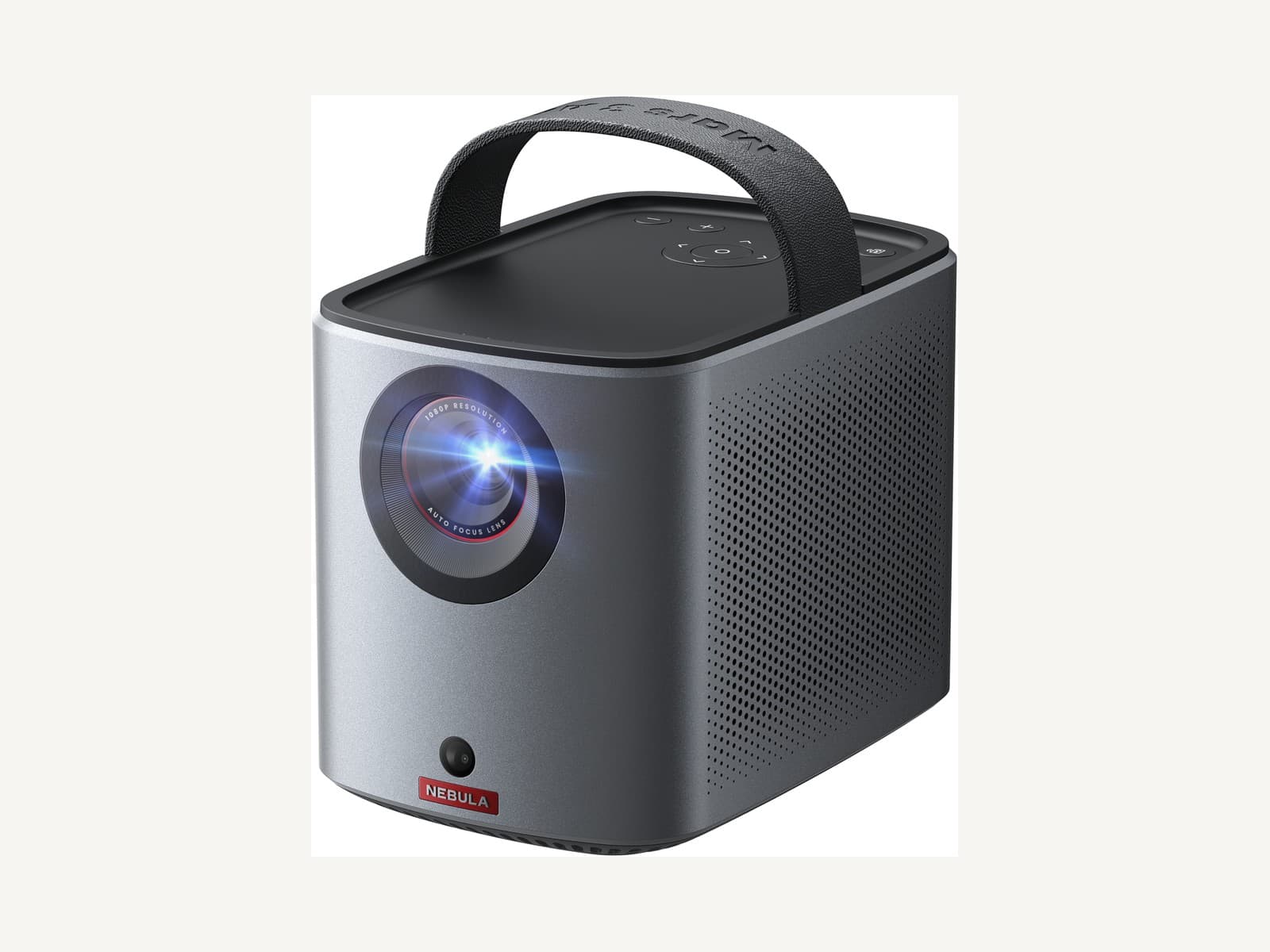
Steps up from the Capsule class: 1080p, 400 ANSI lumens (brand), Google TV + Netflix, battery with a brand ~2.5h claim, dual 8W Dolby speakers, auto keystone/focus, and fan noise listed under 28 dB as a brand claim. Official: Nebula Mars 3 Air.
- List band: ~$520–$600 (list often ~$599; street often lower)
- Best for: brighter portable bedroom/backyard hybrid when you want more ANSI light than the Capsule class
4. Samsung The Freestyle 2nd Gen — tilt lifestyle, plug-in
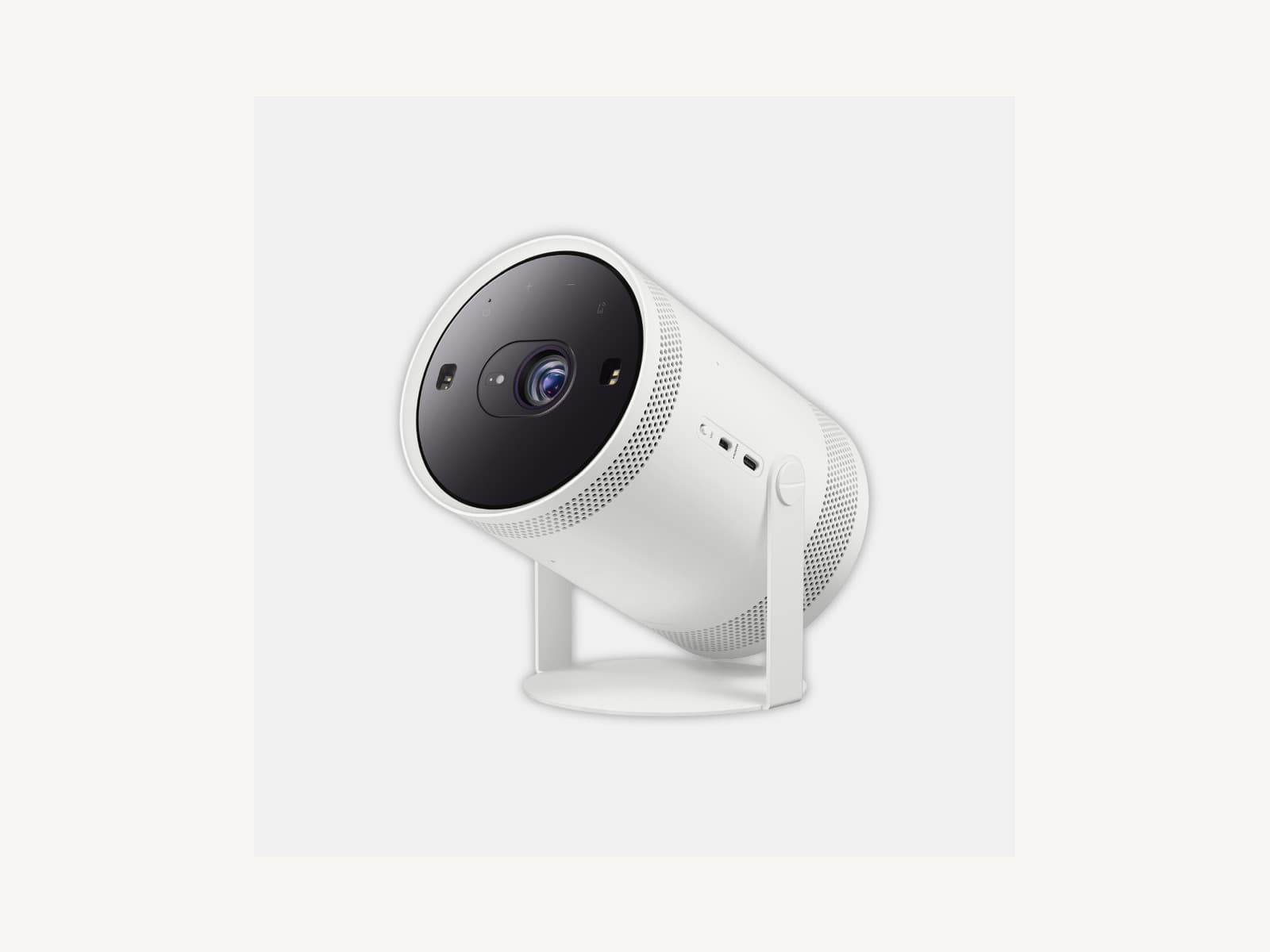
SKU SP-LFF3CLAXXZA: 1080p, 230 ANSI lumens (brand), Tizen Smart TV + Gaming Hub, auto focus / level / keystone, 180° cradle. No built-in battery—Samsung sells an optional battery base as a separate accessory (runtime is whatever that accessory’s sheet says; we are not inventing minutes). Official: Samsung The Freestyle 2nd Gen.
- List band: MSRP ~$799; street often ~$500–$600
- Best for: Samsung-ecosystem households; ceiling-or-wall tilt from a plug-in nightstand without pretending it is a battery can
5. BenQ GV31 — rotating lens for pillow / ceiling
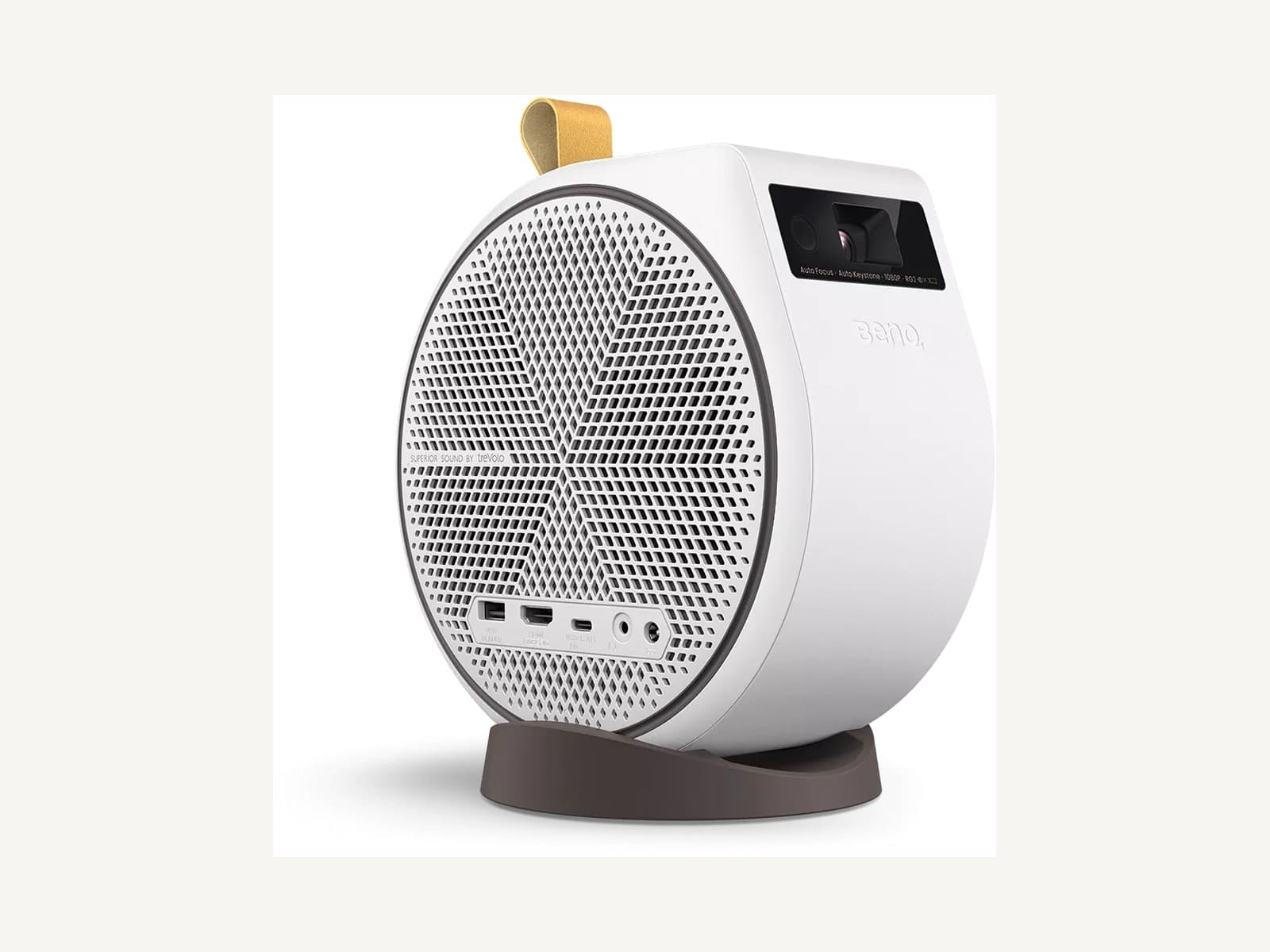
Built around a rotating lens for high and ceiling angles: 1080p, 300 ANSI lumens (brand), Android TV with Netflix license (per BenQ US and reviews), built-in battery with a brand up to ~180 min low-power claim. Official: BenQ GV31.
- List band: ~$599 street (PCMag-cited band in Nov 2026 research)
- Best for: small bedrooms where the picture lives on the ceiling or high wall while you stay on your side
Placement tips for wall movies
Distance for ~80–100" at ~1.2:1. At a typical ~1.2:1 throw, image width is roughly distance ÷ 1.2. For an ~80–100" diagonal (16:9 width ≈ 70–87"), expect on the order of ~7–9+ feet of throw—measure your wall-to-nightstand gap before you buy. True short-throw is a different product class.
Blackout helps more than brochure lumens. Curtains that actually close beat arguing with a west window. A white or light-neutral wall is enough for many dark-room nights; a gray screen is optional, not required for sleepy viewing.
Sound vs partners. Built-in speakers are fine for solo nights. Shared walls or a sleeping partner usually means Bluetooth headphones or a small soundbar you can mute fast. Fan noise and dialogue volume are separate problems—solve both.
Side-sleeper formula. Aim high (ceiling or upper wall) with a tilting cradle or rotating lens → keep the unit on the nightstand, not under the bed → use headphones if someone else is asleep → leave a USB-C bank nearby only if the brand documents power-bank use.
FAQ
Can a side sleeper project on the ceiling?
Yes—if the stand or lens rotates far enough (Freestyle-class 180° cradles, MoGo-class multi-angle stands, GV31-style rotating lenses). Confirm the tilt range on the PDP; not every “portable” aims straight up.
ISO lumens vs ANSI lumens—what should I trust?
Prefer ISO 21118 or ANSI figures the brand publishes. They are standardized brightness claims. “LED lumens” marketing numbers are a different, often inflated scale—do not treat them as interchangeable with ISO/ANSI when you compare models.
Do I need a short-throw projector for a tiny bedroom?
Only if the projector must sit very close to the wall. Most bedroom portables are standard throw (~1.2:1). Measure first. If you only have two feet of depth, look at true short-throw / UST living-room designs instead of forcing a can projector against the baseboard.
Is casting enough, or do I need Google TV / Tizen?
Casting works. Licensed Netflix (and peers) on Google TV or Tizen is simply fewer steps at bedtime. If you already live in Apple TV / Fire Stick land, a dumb HDMI projector can still fit—just budget the stick and the remote clutter.
Honest close
Specs, brightness standards, noise figures, battery-minute claims, and list bands above are as listed by brands or major retailers in Nov 2026—not AiComparor lab scores. Prices move. Firmware changes Netflix entitlement. Open the current official PDP before you buy. This page is a filter for wall movies and sleepy nights, not a trophy list.