A washable makeup bag is not a free pass for any cycle, any temperature, or the dryer. One hot tumble later, zippers warp, elastic goes limp, and a soft mat forgets its open circle. “Machine washable” usually means a narrow window—often cold or 30°, gentle, then hang dry. Read the care line for your material and open mode first; then wash with intention.
Disclosure: This article may contain affiliate links. If you buy through them, we may earn a commission at no extra cost to you. We only recommend products that fit our editorial criteria.
Soap vs sanitizer wipes
For the weekly wipe-down, mild soap and water usually beat sanitizer wipes. Habitual alcohol can dry and crack coated, vegan, or PU leather. Cleaning is not the same as disinfecting—read the brand care line first, then decide whether that week needs a full wash or just a damp cloth.
Start with the care line (not the marketing word “washable”)
Treat “washable” and machine washable makeup bag as marketing shorthand until you find the actual care sentence—on a hangtag, product FAQ, or material note. Look for four details:
- Method: machine wash, hand wash, wipeable, or spot clean only.
- Temperature: cold, 30°, or “warm” (if warm is not named, stay cold).
- Cycle: gentle / delicate; never assume a normal load.
- Dry: hang dry, air dry, or an explicit “do not tumble dry.”
If the page only says “machine washable,” default to cold, gentle, hang dry—and confirm on the brand site before you escalate. Fabric and leather SKUs of the same silhouette can diverge: one may be fully washable; the other spot-clean only with a washable liner. Match care to the material you own, not the family name. Below we paraphrase brand care as type examples only—not a laundry test, and not a claim that one bag washes “better.”
Care lines from public specs (type examples)
Paraphrased from brand care copy / public specs (checked 2026-10-29). Not a laundry test or durability ranking.
| Type example | open_mode | Care paraphrase |
|---|---|---|
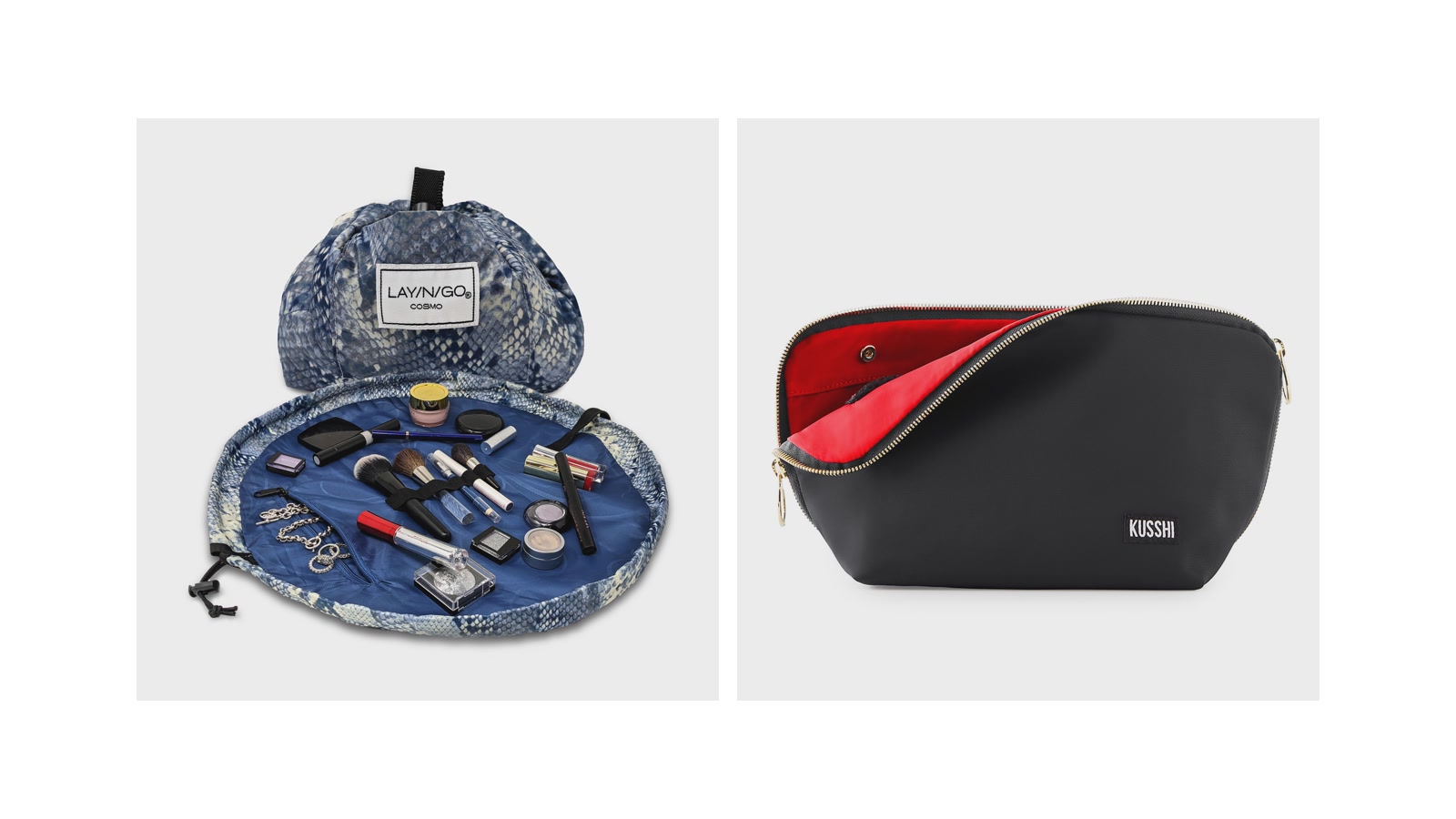
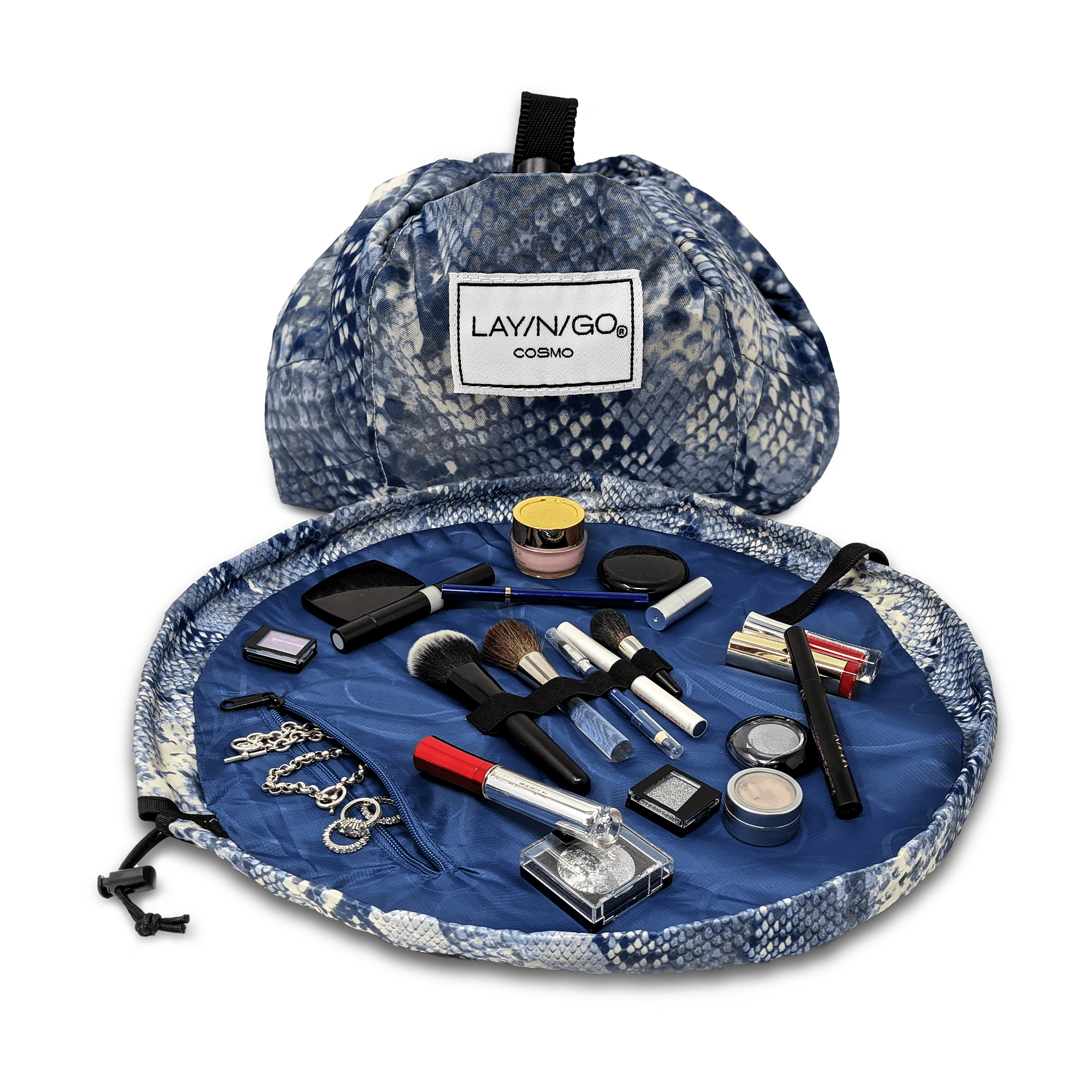
| Lay-n-Go COSMO (20") | drawstring_mat | machine washable and wipeable; cold water, gentle cycle, hang dry; Do not tumble dry |
| Flat Lay Co Drawstring (Pink Lily) | drawstring_mat | Machine washable at 30° gentle; hang dry; Do not tumble dry / iron / bleach; Nylon interior + Polyester exterior (human audit) |
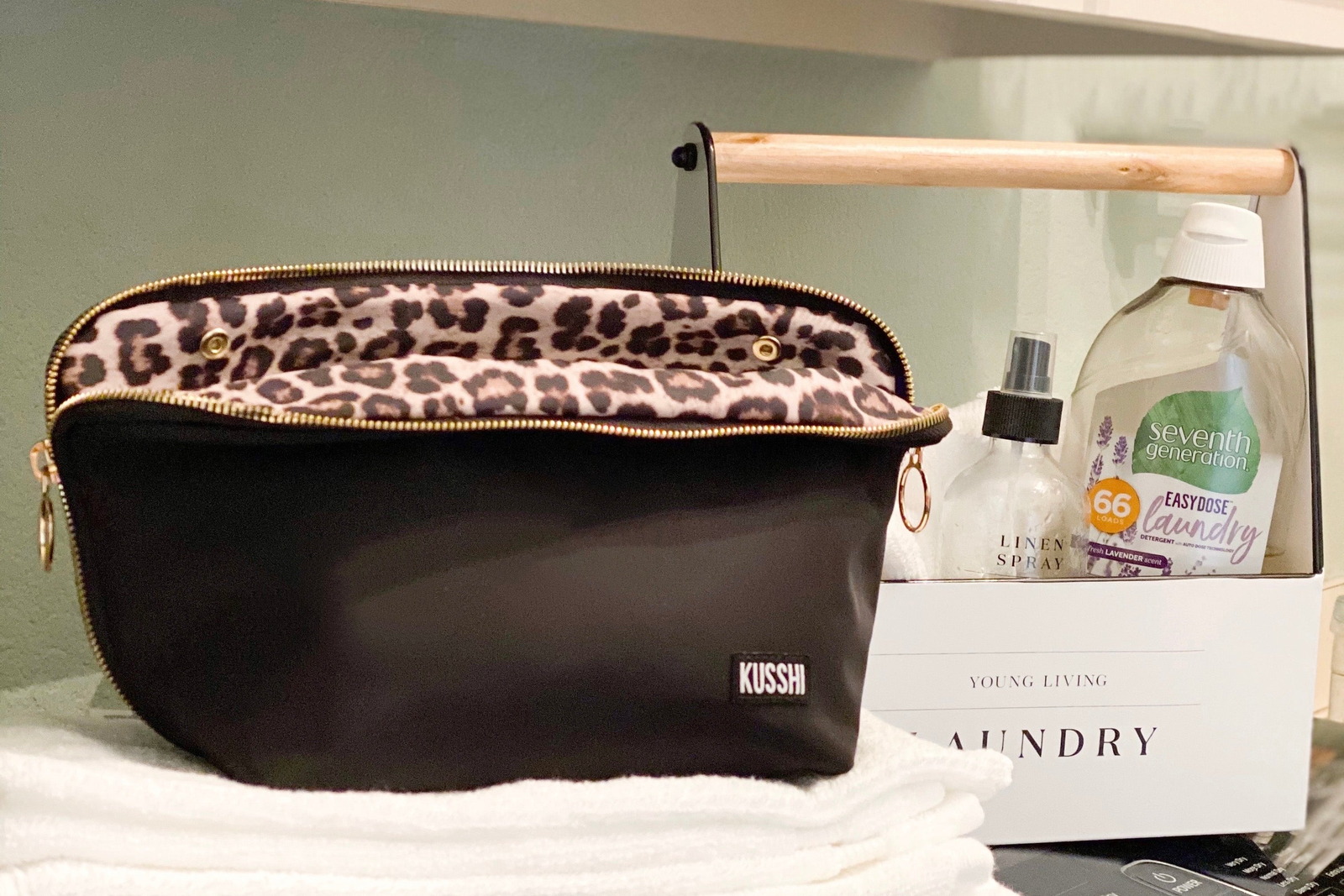
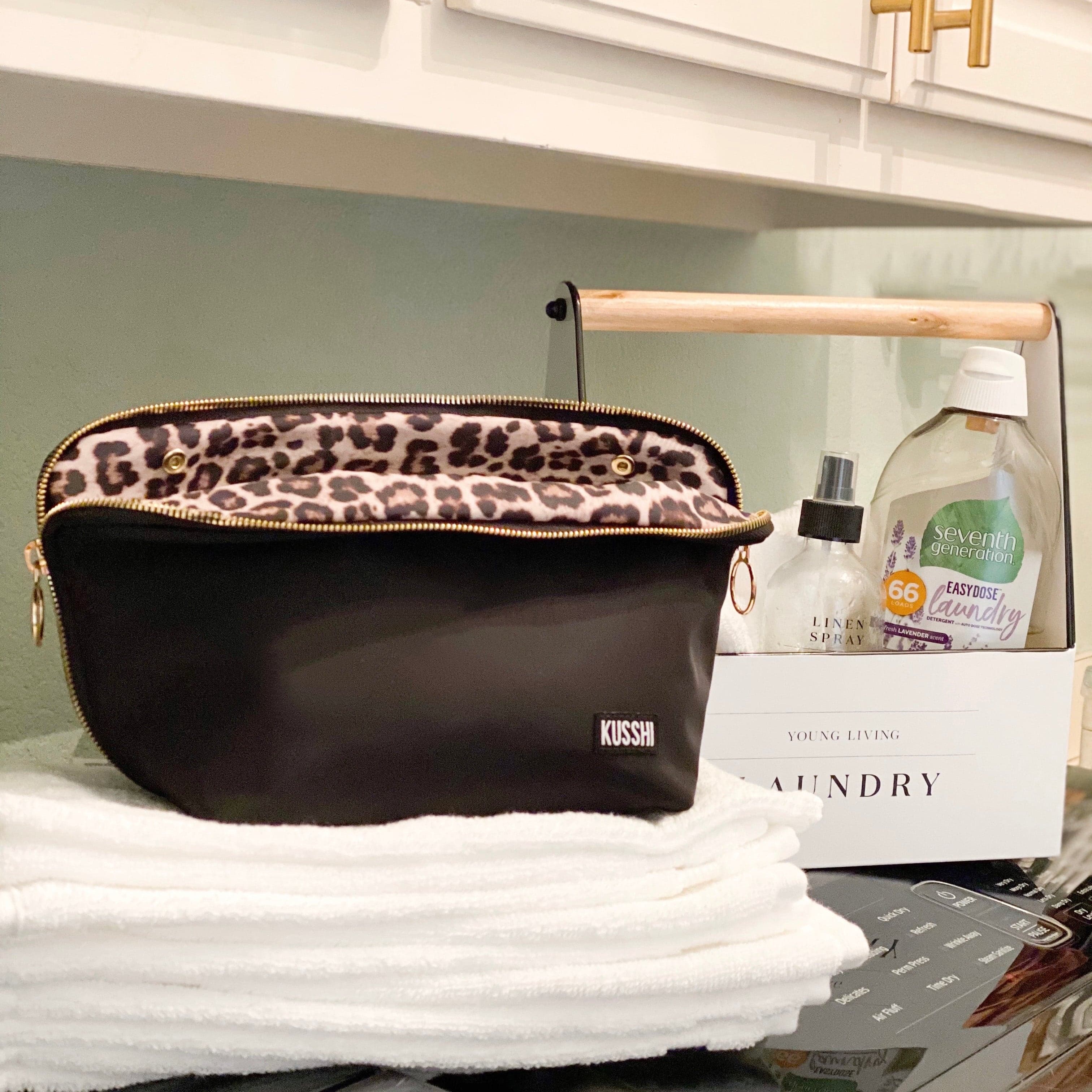
| KUSSHI Signature — Fabric | tray_zip_3side | Fabric bags fully machine washable |
| KUSSHI Signature — Leather | tray_zip_3side | Leather spot clean only; lining / zip-out liner machine washable |
Stay inside those brand lines: cold for Cosmo-style guidance; 30° where Flat Lay Co publishes it. Do not invent warmer cycles—or a Cosmo closed size.
What usually goes wrong: shape, zippers, elastic, leather
Most laundry regret is mechanical, not mysterious.
Shape. Soft drawstring mats rely on fabric memory and a clean open circle. High heat and tumble drying leave permanent creases or a collapsed cinch; structured zip trays can soften at the corners if they tumble wet against hard hardware.
Zippers. Three-sided zip trays carry long zipper runs. Metal teeth banging other garments (or the drum) dent fabric and stress the tape. Close zippers before a machine wash; use a mesh laundry bag if you have one.
Elastic. Brush loops stretch when washed or dried hot. Once elastic loses recovery, slots stop holding brushes—no wash restores them.
Leather. Water and detergent can stain, stiffen, or dull leather exteriors. Spot clean when the brand says so; washing a zip-out liner is not the same as putting the leather shell through a cycle.
Powder and foundation smears are secondary: pretreat them, but do not confuse “stained” with “structurally ruined.” Structure fails from heat, agitation, and the wrong material method.
Drawstring mats vs zip trays in the wash
Open mode matters as much as fabric. If you are unsure which silhouette you own, start with how drawstring mats differ from zip trays—the structure mother page—then return to the wash steps.
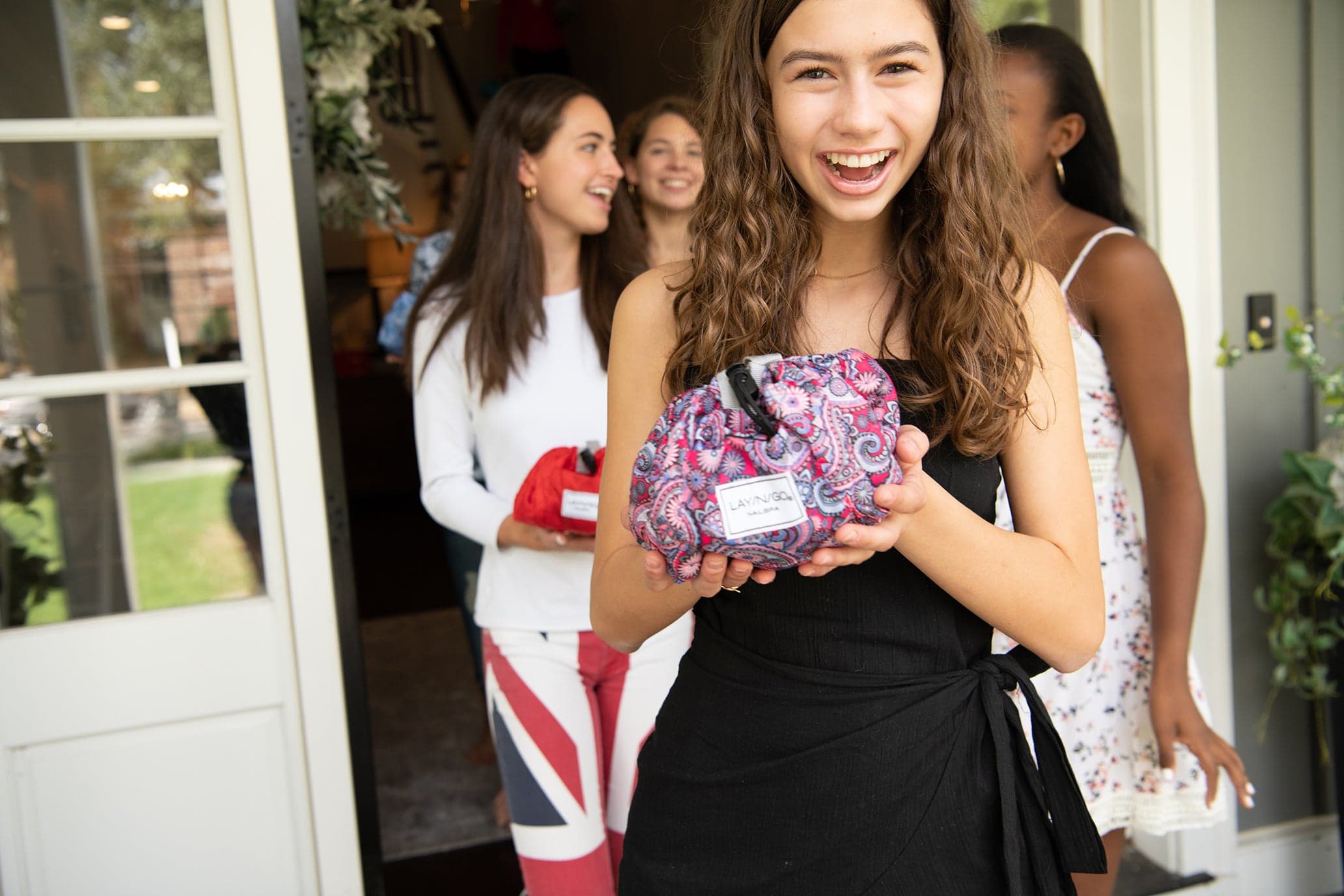
Drawstring mats (open into a circle; cinch closed) go in as a soft pouch or flattened disc. Risks: cord tangling; elastic brush rings stretching; the circle losing its drape if heat-set in a crumpled fold. Before the cycle, cinch or tuck the cord; after, open the mat fully while damp so it remembers a circle, not a wad.
Zip trays (three-sided exterior zipper; unfold into a shallow open box) hold more architecture when wet. Risks: zipper-tape strain, corner collapse, and trapped water in mesh pockets. Zip closed when machine-safe; empty every pocket; after washing, unzip and prop the tray open so air reaches seams and lining.
Neither open mode wins a wash contest. They fail in different places—cords and circles on mats; zippers and corners on trays.
Fabric vs leather: when machine wash stops
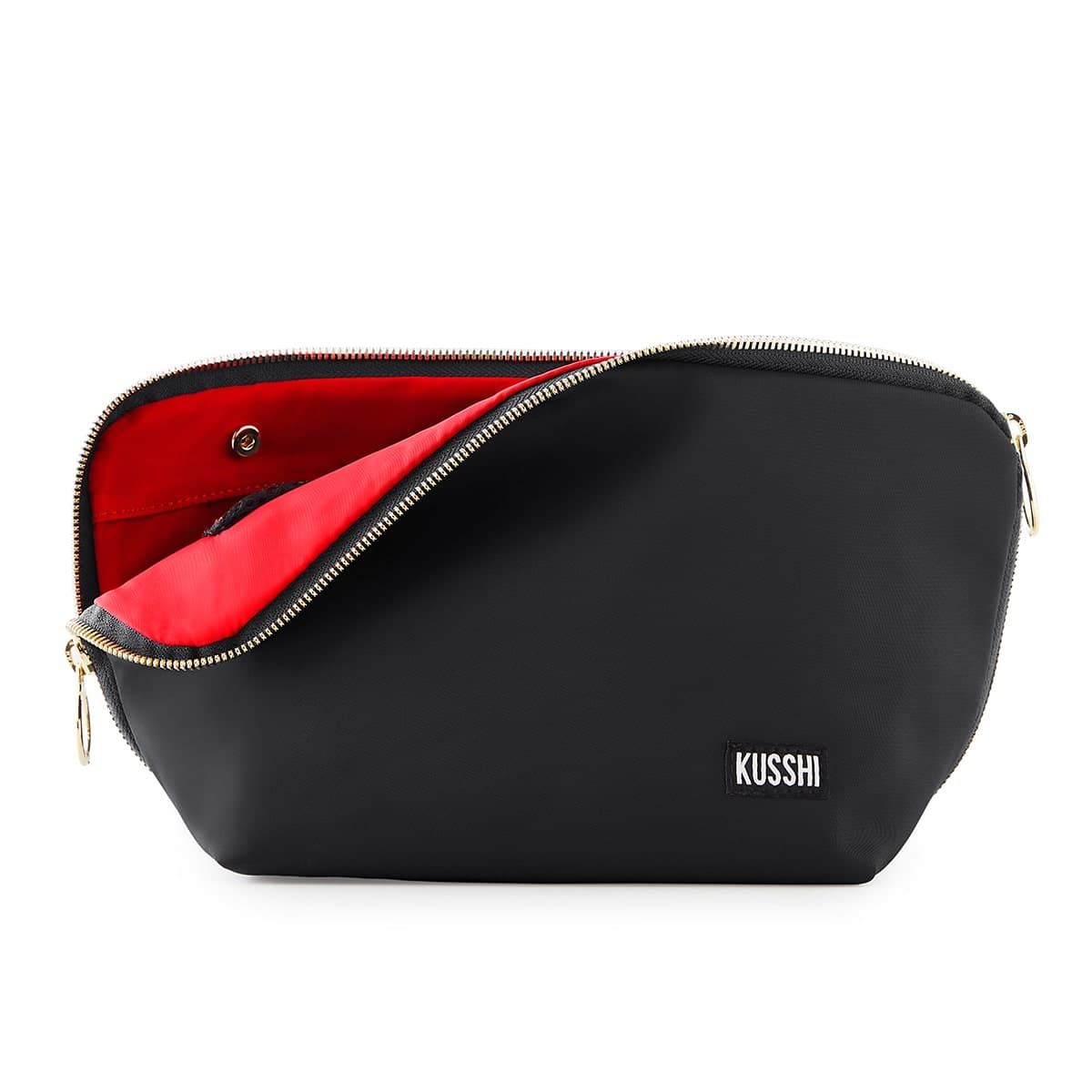
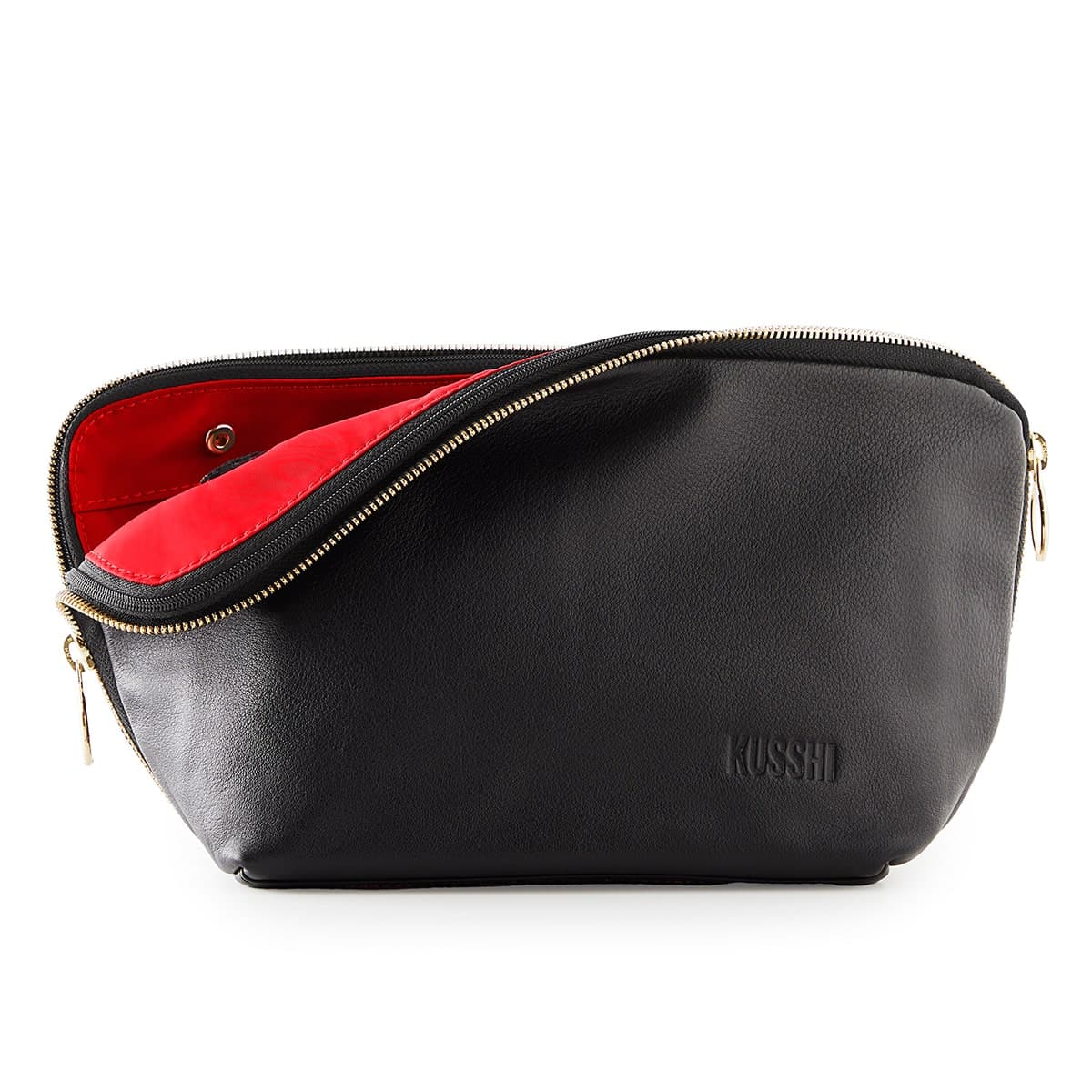
Stop at the material SKU.
Fabric (polyester, nylon, micro satin, and similar shells in the type examples) is where machine washable claims usually live—still under cold or 30°, gentle, hang dry. Wipeable surfaces handle light spills between washes; they do not cancel the care line for a full clean.
Leather stops the machine for the exterior. Follow spot-clean guidance. If the bag has a zip-out liner marked machine washable, wash the liner alone on gentle, then hang dry. Never assume a leather Signature-style tray washes like its fabric twin.
PU / vegan leather: If the shell is faux or vegan leather, default to a damp cloth plus mild soap and spot-clean only—unless the care line explicitly allows machine wash. Skip bleach and solvent wipes; they dry and crack coatings faster than a careful wipe-down.
Mixed leather trim on a fabric body: treat the leather rule as the ceiling unless the brand says otherwise. When in doubt, spot clean the exterior and wipe the interior—less drama than a ruined finish.
A gentle wash day (empty → pretreat → cycle → hang dry)
If the care line allows a machine wash, treat the bag like laundry you still want to open flat tomorrow:
-
Empty completely. Remove every compact, tube, brush, and loose powder crumb. Check zip pockets, mesh sleeves, and the raised lip of a mat. Shake debris out—grit does not belong in the drum.
-
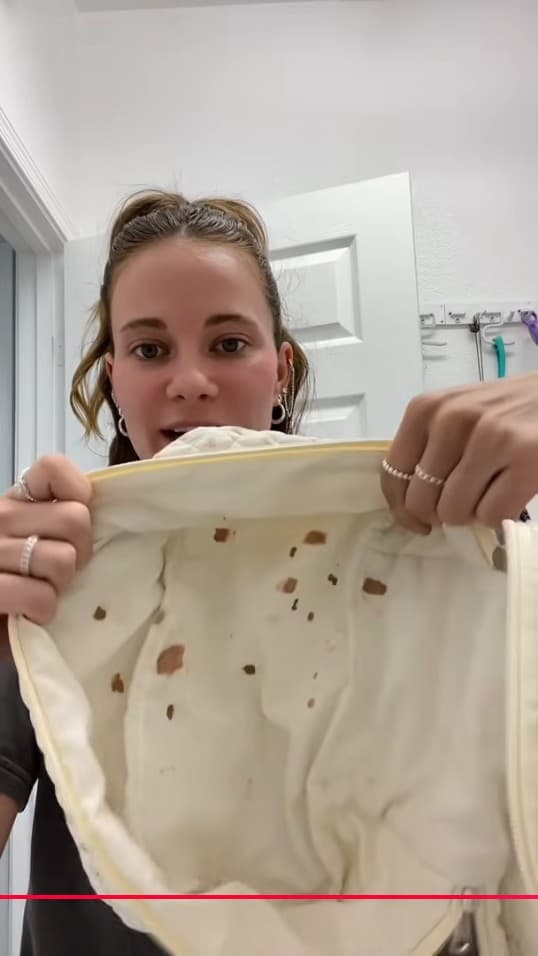
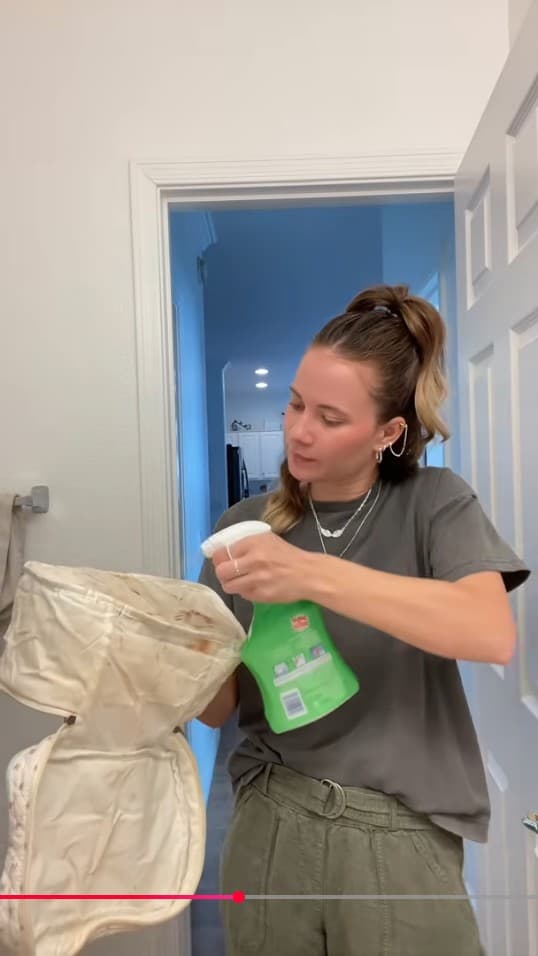
Pretreat stains. Dab foundation or cream marks with a tiny drop of mild detergent on a damp cloth, working from the outside of the stain inward. Skip bleach. Let it sit a few minutes; do not scrub elastic raw.
-
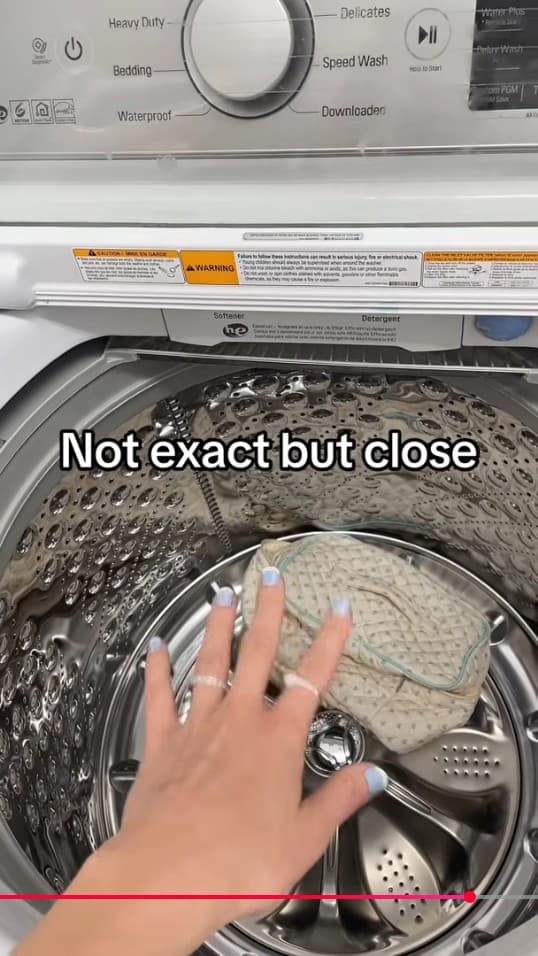
Secure hardware. Close three-sided zippers. Cinch or tuck drawstring cords. On a gentle cycle, slip the empty bag into a mesh laundry bag so zip pulls and cord tips do not catch.
-
Keep the cycle quiet. Cold water (or 30° only if your brand names it). Gentle / delicate. Mild detergent. Wash with similar soft items or alone—skip heavy denim and sharp hardware in the same load.
-
Skip the dryer. Hang dry is the default across these care paraphrases. Do not tumble dry or iron. Pull the bag promptly so folds do not set in the drum.
Cleaning brushes is a separate ritual from washing the bag. For brush roles, see beginner makeup brushes—that care does not transfer to fabric, zippers, or leather shells.
Aftercare: reshape while damp
Shape returns while the bag is still damp—not after it air-dries into a crease.
- Drawstring mat: Open it fully on a clean towel. Smooth the circle with your palms. Align the elastic brush ring so loops sit evenly. Hang or air-dry away from direct sun and heaters.
- Zip tray: Unzip three sides. Prop the walls open with a clean rolled towel if corners want to collapse. Leave mesh pockets open so moisture escapes. Hang or rack-dry—never radiator-hot.
Reshape once, then leave it. Repeated wet-flexing of half-dry leather or coated fabric does more harm than good. When fully dry, zip or cinch closed so the bag stores in its intended silhouette.
Wipe product packaging before it goes back in—foundation rings and powder dust re-soil a clean lining fast. A washed bag packed with dirty bottles is only temporarily clean.
When washing won’t fix it
A clean bag is not a repaired bag. Wash will not restore dead elastic, un-warp heat-damaged zipper tape, reverse leather water spots from a mistaken machine cycle, erase deep dye transfer, or rebuild a mat that dried crumpled for days.
At that point, replace a worn liner (if sold separately) or the bag. Wash after a spill, before or after a trip, or when the lining looks or smells dingy—not on a fear-based monthly schedule—and you avoid the “emergency hot wash” that causes most of the damage above. For more construction context, browse guides.
FAQ
Can I put a machine washable makeup bag in the dryer?
Almost never, if you follow the care lines in the type examples above. Cosmo-style and Flat Lay Co–style copy say hang dry and do not tumble dry. Heat collapses shape and cooks elastic. If a future SKU explicitly allows low-heat tumble, follow that line—not a general habit.
How do I wash a drawstring / lay-flat bag?
Empty it, pretreat stains, tuck or cinch the cord, use cold or brand-stated 30° on gentle, then hang dry. While damp, open the mat into a full circle so it dries in shape. For structure versus zip trays, see how drawstring mats differ from zip trays—the wash steps stay gentle either way.
Can leather makeup bags go in the washing machine?
Not the leather exterior—spot clean only when that is the brand line (as with KUSSHI Signature leather in the table above). Zip-out liners marked machine washable can usually go alone on gentle; hang dry the liner and keep water off the leather shell.
Do brush slots need special care?
Yes: protect the elastic. Avoid hot water and the dryer. Pretreat makeup on the loops gently; do not stretch wet elastic to “open” slots. If loops are already loose, washing will not tighten them—that is wear, not dirt.
How often should I wash a makeup bag?
After a spill; before or after a trip; otherwise when the lining looks or smells dingy—not on a fear-based monthly schedule. Heavy cream users may wash more often than powder-only kits; the cue is residue and odor, not a calendar guilt trip.
How we write care guides
We paraphrase brand care copy and public specs checked on the date in the table disclaimer. We do not run laundry durability tests, invent wash counts, or rank bags by how “washable” they feel. Product names are type examples for open mode and material.