A makeup bag with brush holder sounds like one feature. It isn’t. The phrase covers elastic slots, mesh pockets, and removable or snap-in organizers—different machines scored as if they shared one part. Comparing by headline “slot” counts misses the taxonomy.
Disclosure: This article may contain affiliate links. If you buy through them, we may earn a commission at no extra cost to you. We only recommend products that fit our editorial criteria.
Short answer: pick by how you grab brushes
“Brush holder” usually means elastic upright slots, mesh or zip compartments, or a removable / snap-in / standup insert—not one design. Standup or elastic for sink-side pulls; an elastic ring on a flat mat when you hate rollers; mesh for mixed tray tools; a removable holder when brushes must survive a personal-item crush. Do not cross-rank brands by slot count.
Quick scenario map (types only—not a ranking)
| Your scene | Holder type that usually fits | Type example (illustrative) |
|---|---|---|
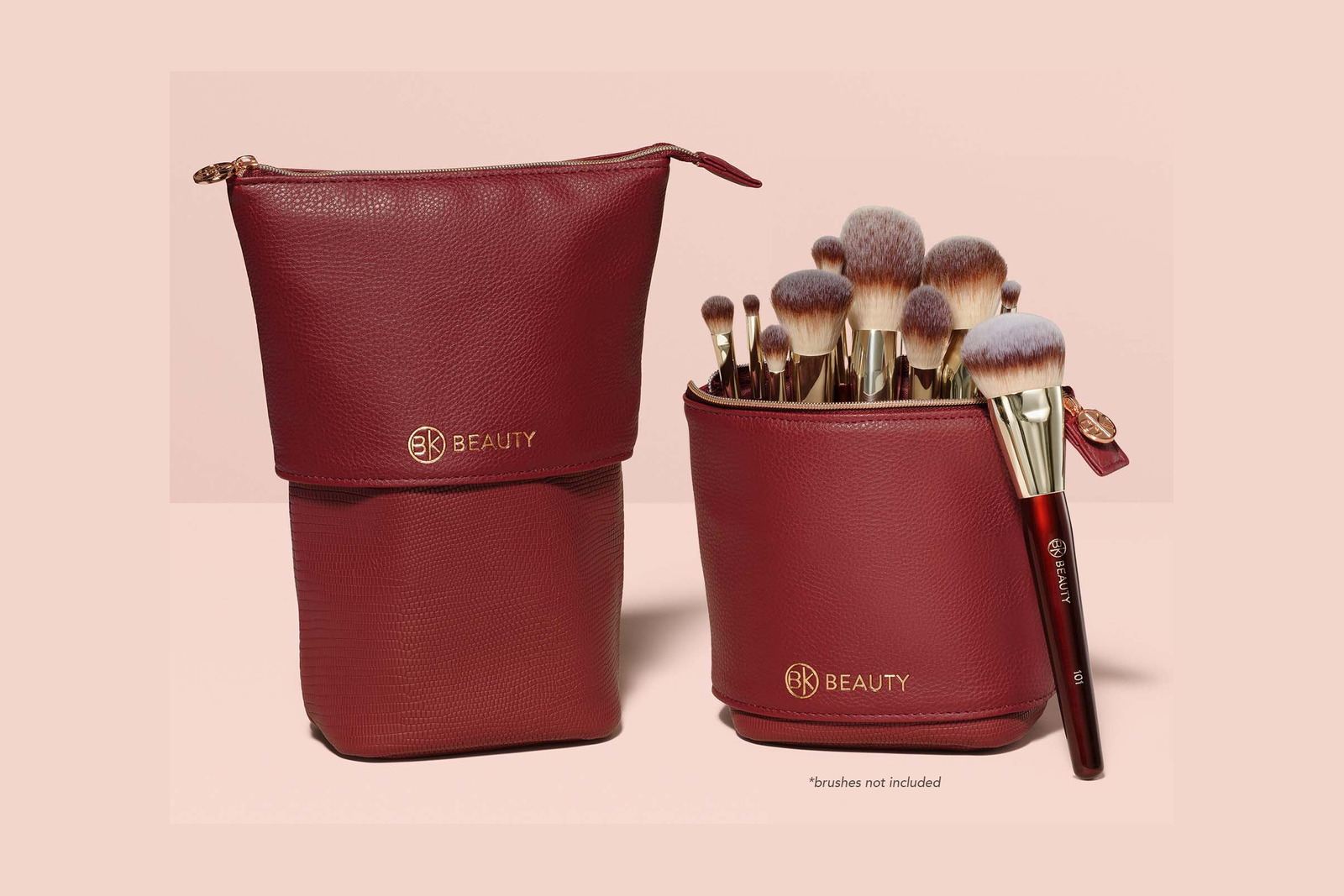
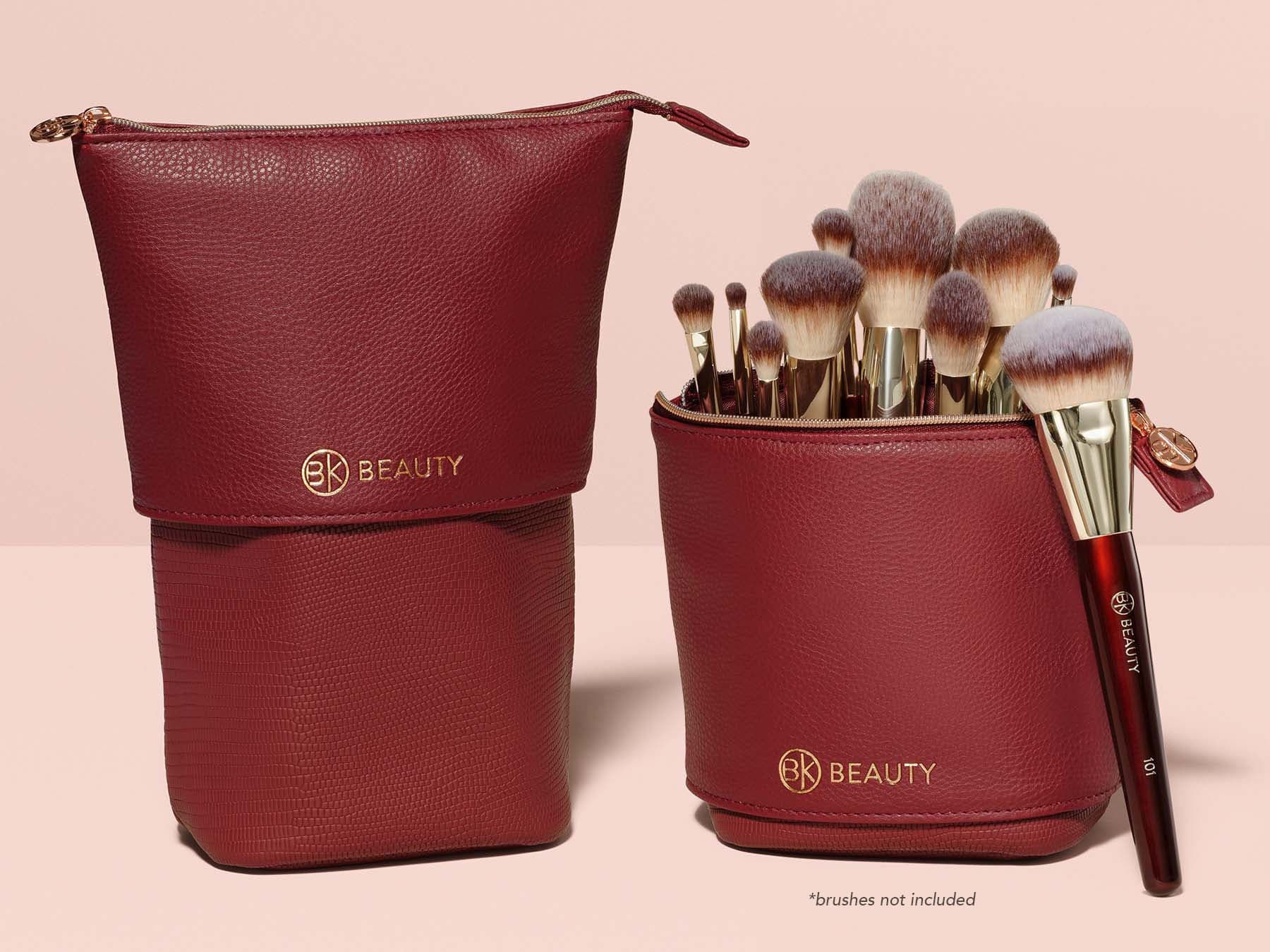
| Hotel or home sink, upright grab | Standup insert or elastic slots | BK Beauty–style standup brush holder / travel bag |
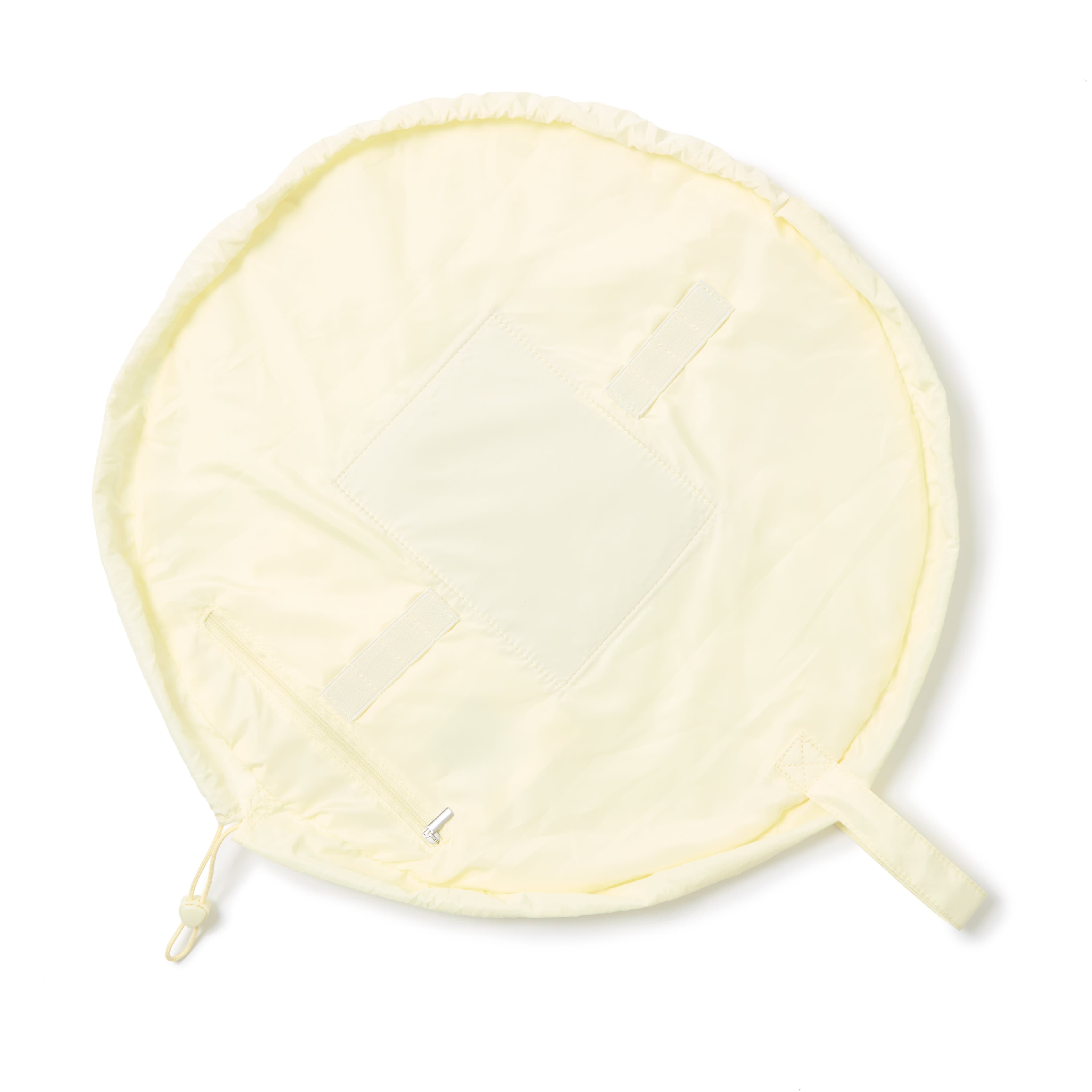
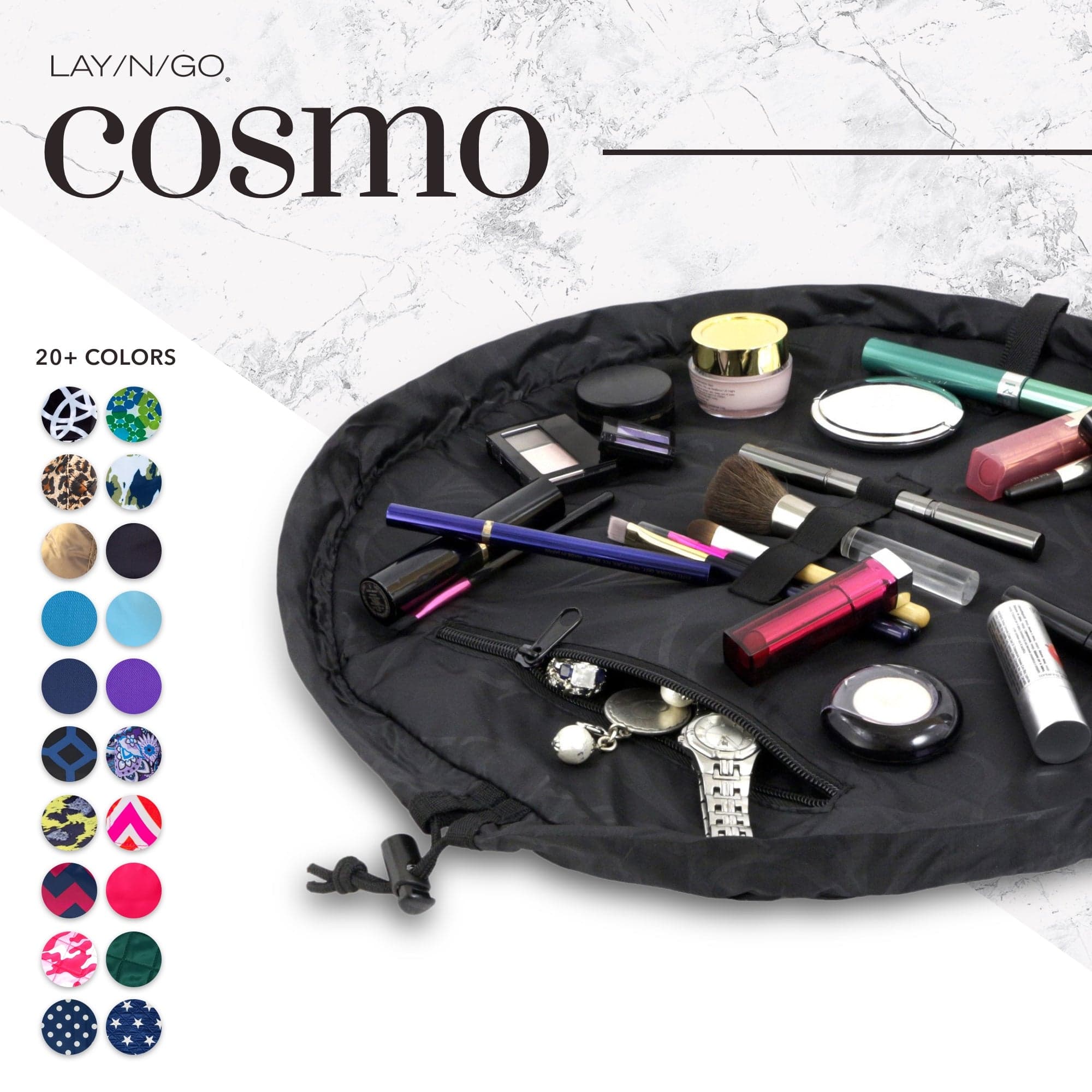
| Flat mat, stop brushes rolling | Elastic ring / slots on a drawstring mat | Flat Lay Co–style or Cosmo-style elastic holder |
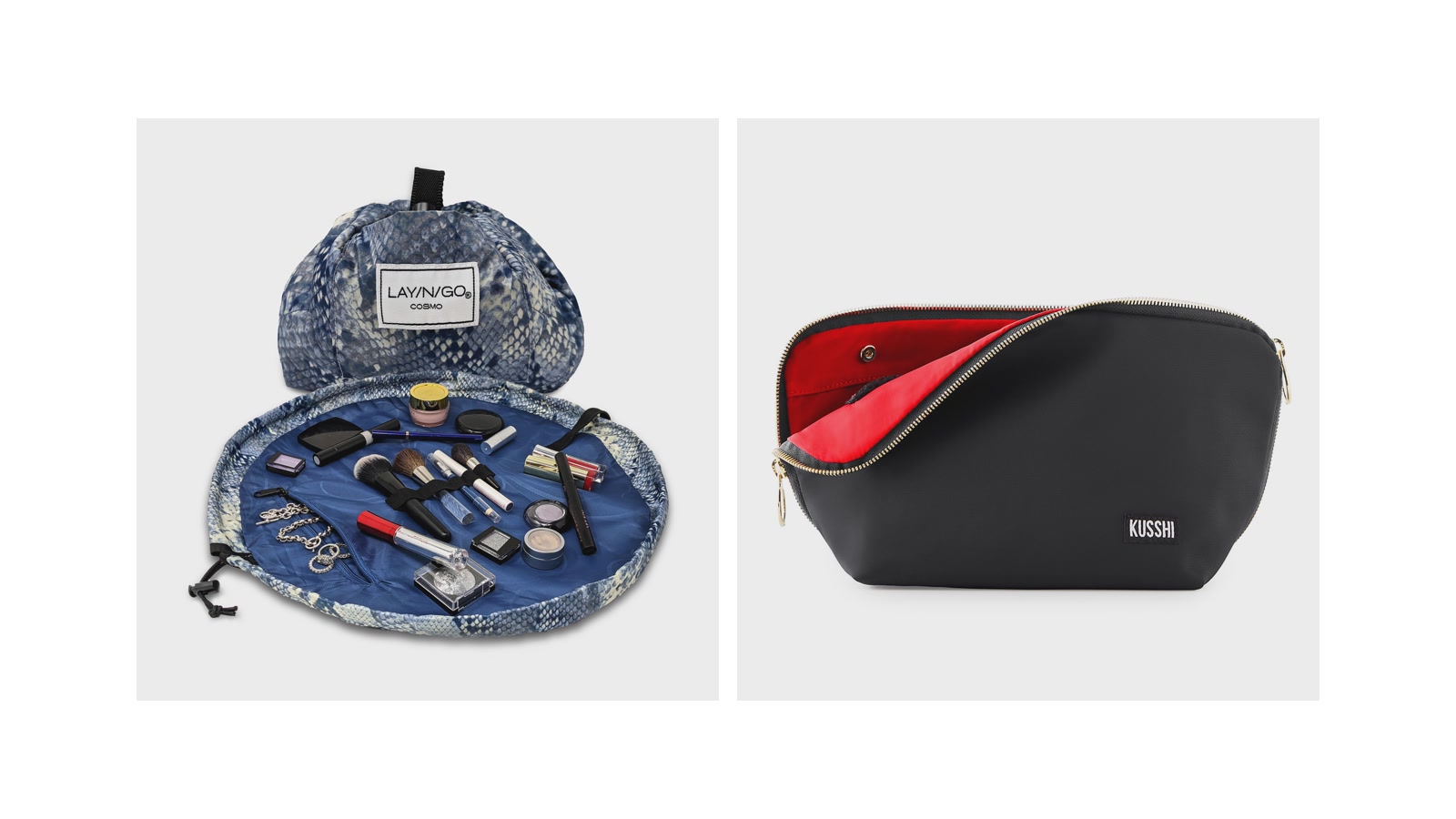
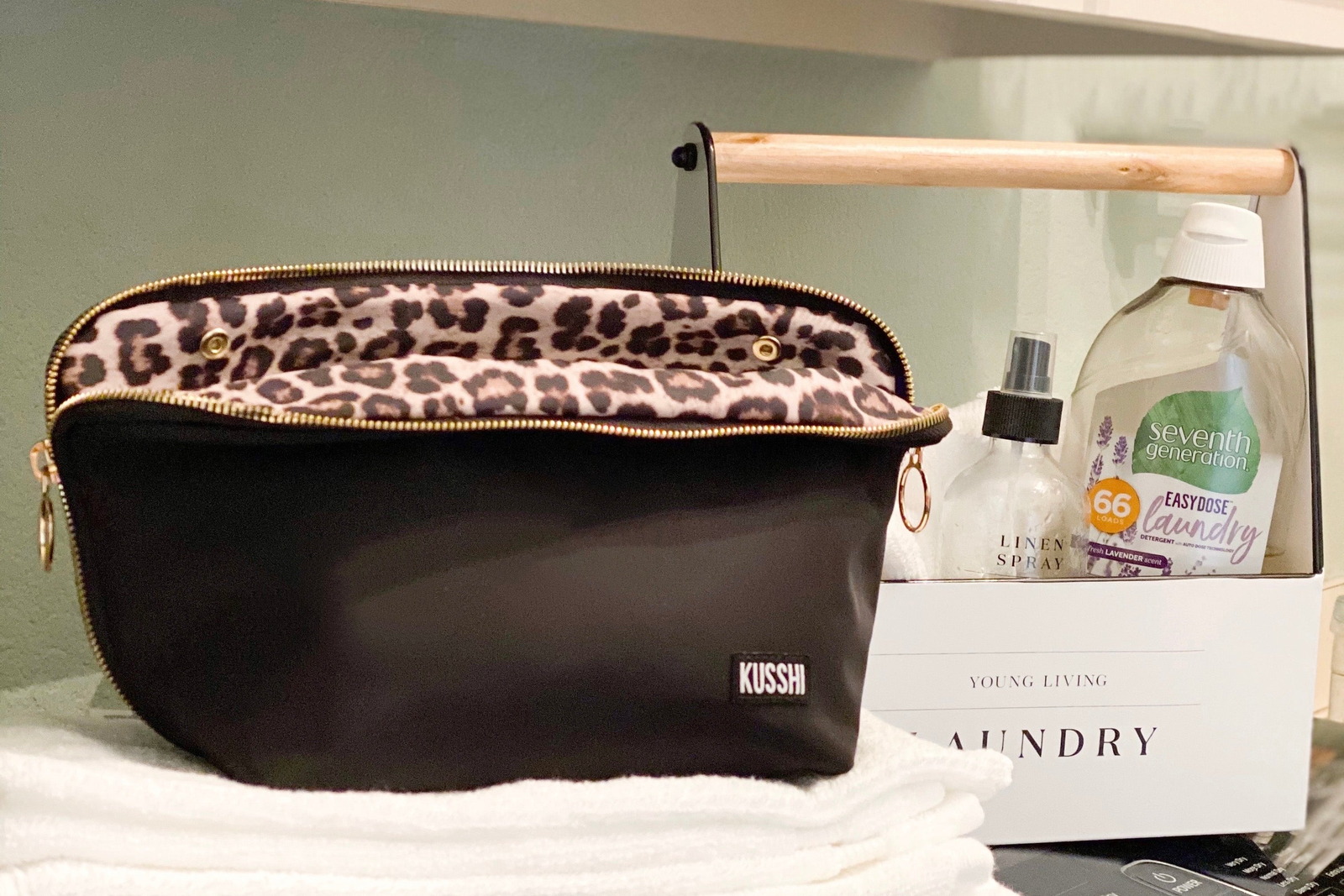
| Tray kit, mixed sizes | Mesh + zip compartments | KUSSHI-style double mesh (optional snap-in) |
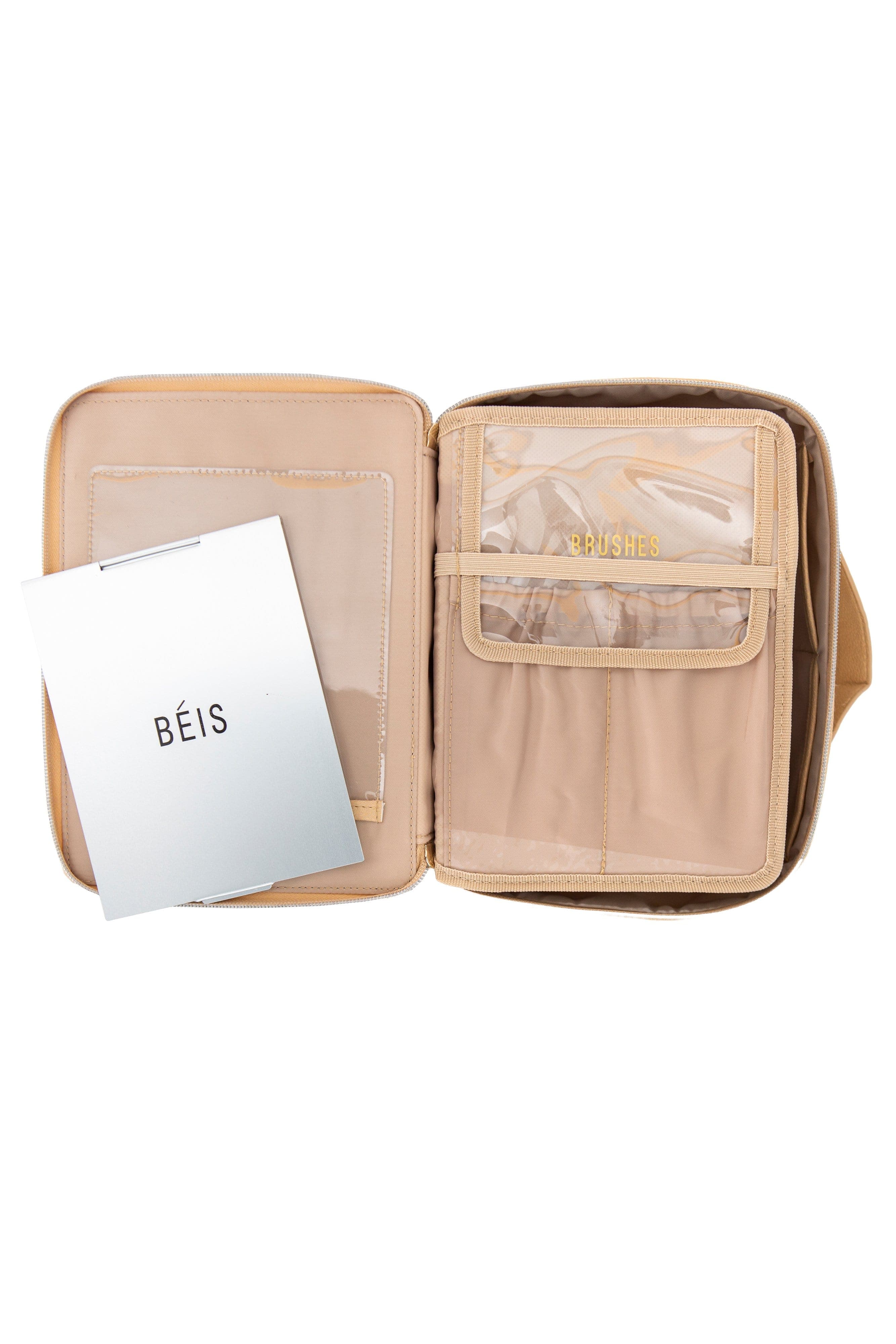
| Personal-item crush / removable rack | Removable brush holder insert | Béis-style removable brush holder |
One travel note: liquids still need a TSA quart bag; the holder only decides whether brushes survive a personal item—not a packing guide.
What “makeup bag with brush holder” usually means
Retail “brush holder” means any anti-rattle structure—not one brush per loop. Standup sleeves and removable racks sit with snap-in organizers in the modular/insert family.
Open style still sets where the holder sits—mat elastic vs tray mesh—see how drawstring mats differ from zip trays. This page stays on holder taxonomy.
Beginner kit size ≠ bag loops. Match holder type to how you pack; match tool roles to beginner brush roles.
Elastic slots: upright control, count claims, stretch wear
Elastic slots (or an elastic brush holder / ring) give each handle a stretch “home.” On a flat-open mat, brushes often stand on the rim while you work the center—easy single pulls, until heat, hard laundry, or fat handles kill recovery.
When they help: upright vanity grabs; a stable everyday set; flat-open work without rollers into cream jars.
When they frustrate: mixed handle sizes; tired elastic; tools that never fit a published count.
Published slot numbers help inside one brand’s lineup, not across brands: one page may say 8 slots; another “elastic brush holder” with no published count. Do not invent a number—or treat “eight beats unknown” as quality. Protect stretch: no hot water or dryer; gentle pretreat. Wash detail: how to wash a makeup bag.
Mesh pockets and zip compartments: flexible, less “one brush one slot”
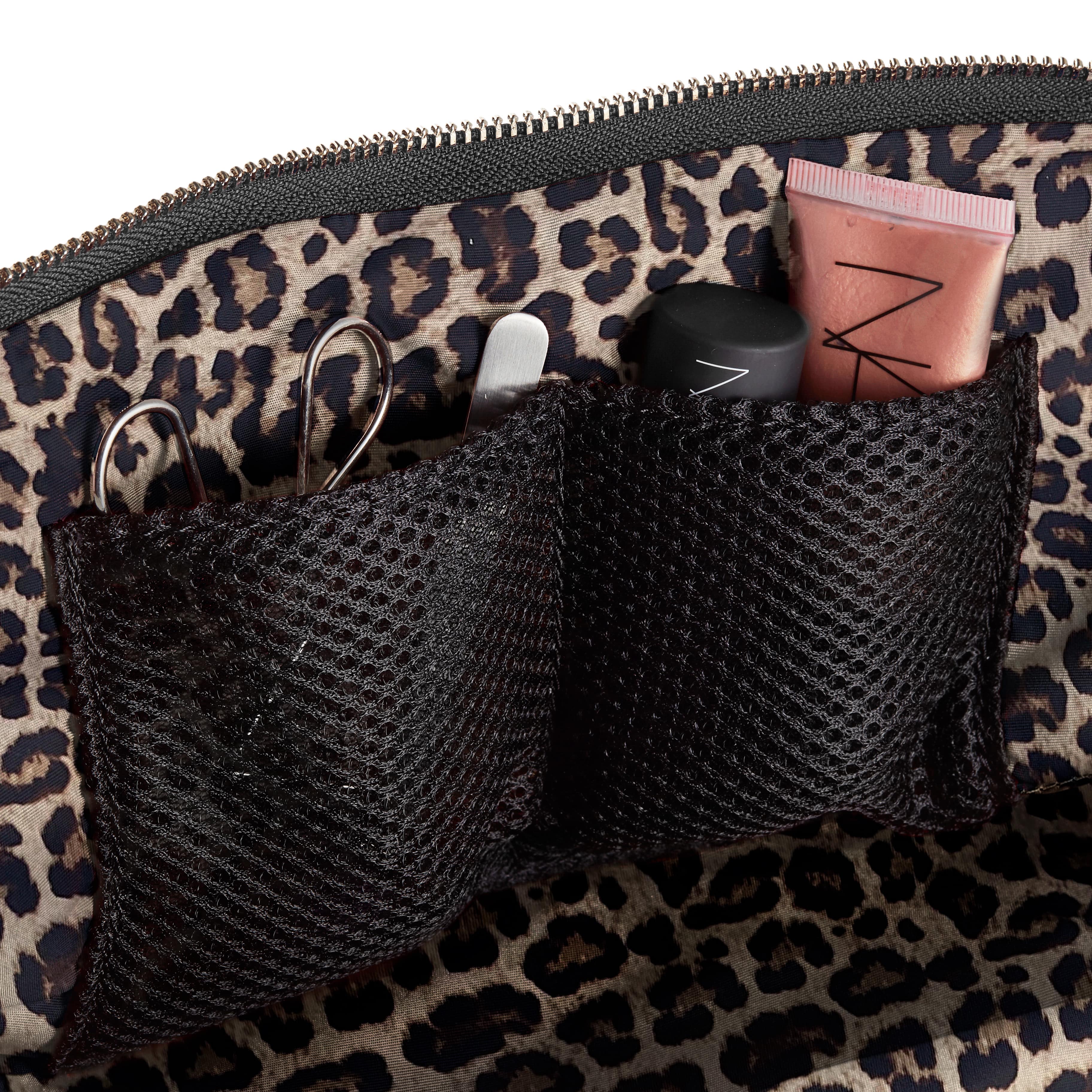
Mesh pockets and interior zip compartments hold brushes as a group—flat, nested, or shared—so odd sizes fit without one elastic diameter. You lose the one-to-one upright map.
When they help: kits that change weekly; nested tray storage; a zip against tote tip-outs.
When they frustrate: you want instant visual ID; wet bristles snag mesh (clean tools first); soft mesh will not stand heavy handles like rim elastic.
Mesh is not “worse elastic”—flexible volume vs upright control. “Double mesh” vs “8 slots” as scores invents a contest specs never set.
Optional snap-in organizers: when the insert is the system
Some bags sell an optional Snap-in Organizer, removable brush rack, or standup travel sleeve. The insert—not shell elastic—is the modular holder; the bag may still use zip and mesh underneath.
When it helps: denser kits without a new shell; brushes separated from liquids; upright wells only on days you need them.
When it does not replace elastic: do not count a snap-in as “dedicated elastic brush slots”—mesh + optional organizer is a different taxonomy row from mats that publish elastic slots. Confirm whether your SKU includes the insert.
Use modular inserts when reconfiguration matters; skip them when a simple elastic ring is enough.
How open style changes brush storage (without rehashing lay-flat)
Brush holders hang on open style:
| Open style | Typical brush-system pairing | Grab gesture |
|---|---|---|
| Drawstring mat | Elastic slots / holder on the rim; often an inside zip | Spread; pull from the ring; cinch |
| Zip tray (3-side) | Interior zip + mesh; optional snap-in | Unzip; work nested pockets; zip closed |
Match holder to open style—full detail: how drawstring mats differ from zip trays.
Slot count isn’t a score—what you can compare fairly
Type examples from public specs (core3)
Paraphrased from brand copy / public specs (checked 2026-10-29). Type comparison only—not a ranking or laundry/durability test.
| Type example | open_mode | brush_system (public paraphrase) |
|---|---|---|
| Flat Lay Co Drawstring (Pink Lily) | drawstring_mat | 8 elastic brush slots; inside zip pocket |
| Lay-n-Go COSMO (20") | drawstring_mat | elastic brush holder (no published slot count); zippered storage pocket |
| KUSSHI Signature | tray_zip_3side | Interior zip + double mesh pockets; optional Snap-in Organizer (not dedicated elastic brush slots) |
Fair to compare: system type (elastic slots/holder vs mesh + optional snap-in); whether a zip pocket exists; how the holder sits on mat vs tray.
Not fair: ranking by “8 vs unknown vs mesh”; inventing a Cosmo slot count; treating Snap-in Organizer as elastic slots; calling any row a wash or durability winner.
This page does not use price bands or wash lines as a brush-holder scoreboard.
A short checklist before you buy
- Name the holder type: elastic slots / elastic holder, mesh + zip, or mesh + optional snap-in—not “whatever says brush holder.”
- Match open style: circle mat with rim elastic, or zip tray with nested mesh? Detail stays on the lay-flat vs zip-tray guide.
- Ignore cross-brand slot contests. Use a published count only inside one brand’s sizes; treat missing counts as Unknown.
- Check your handle mix. Changing kits favor mesh; a stable everyday set favors elastic upright control.
- Plan care for stretch and mesh. Gentle wash and hang dry protect elastic—see how to wash a makeup bag.
- Separate kit size from bag slots. Beginner brush roles live on the beginner brushes guide; bag loops do not define how many tools you own.
- Scene check (one line): everyday vanity or hotel sink first; a commute pouch is a scene—not a reason to chase a travel ranking.
More frameworks live in guides.
FAQ
What does a makeup bag with a brush holder usually include?
Usually elastic slots/holder, mesh and/or a zip compartment, or an optional snap-in / removable / standup insert. The listing phrase alone does not say which—read the structure before you compare slot counts.
When do elastic brush slots help versus mesh pockets?
Elastic: upright, one-place control on a mat or rim. Mesh: flexible volume for mixed or changing tools in a tray or zip sleeve. Neither is universally “better”—match the hold to how you grab brushes.
Should I buy by the number of brush slots?
No. Slot count is not a cross-brand score. One type example publishes 8 elastic slots; another an elastic holder with no count; a third double mesh plus optional snap-in. Compare system type. Inside one brand, a count can still pick a size—not a winner across constructions.
Do brush holders work the same in lay-flat and zip-tray bags?
No. Mats often use rim elastic; zip trays more often use interior zip, mesh, and sometimes a snap-in. Grab path differs with open style—see how drawstring mats differ from zip trays.
How we pick
We use brush-system type tables and paraphrased public specs on the disclaimer date—no wear tests, auto scores, unpublished slot counts, or ranked winners. Names are type examples only.